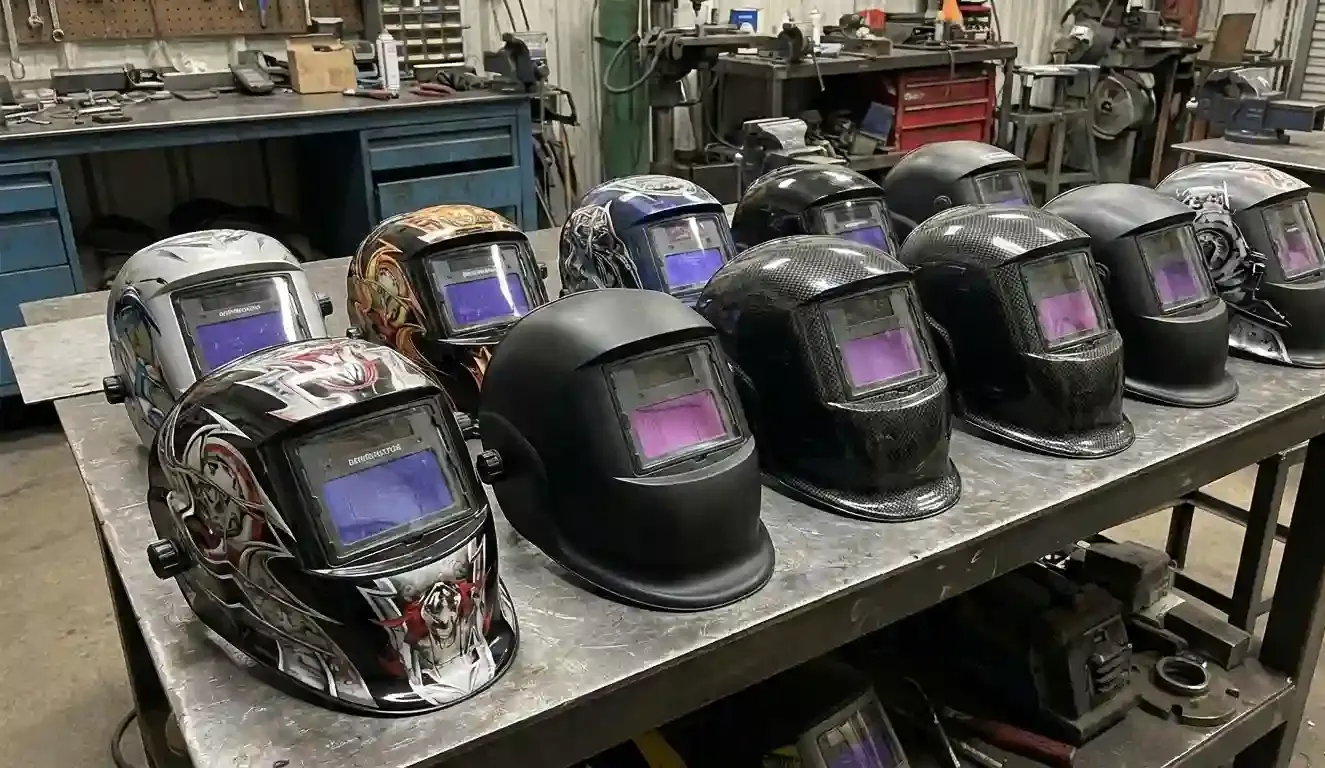
Are Auto Darkening Welding Helmets Safe for Welders
Last Updated: December 11, 2025
Discover if auto darkening welding helmets are safe for welders. Explore key safety features, common risks, maintenance tips, and comparisons to traditional helmets for reliable eye protection in MIG, TIG, and stick welding.
Are Auto Darkening Welding Helmets Safe?
Auto darkening welding helmets have transformed how welders protect their eyes from intense arc light, UV rays, and infrared radiation. Unlike old school passive helmets that demand manual shade flipping, these modern helmets instantly adjust lens darkness when they detect a welding arc. This quick response time often under a millisecond helps prevent painful arc eye or long term vision damage that comes from exposure to harmful rays.
The technology relies on liquid crystal displays (LCD) sandwiched between polarized filters, powered by batteries or solar cells. Sensors around the lens pick up the arc's flash and trigger the darkening, switching shades from light (like shade 3-4) for setup work to dark (shade 9-13) during welding. Welders appreciate staying focused without lifting the helmet, which cuts down on accidents from poor visibility or sudden flashes.
Key Safety Advantages
These helmets shine in real world welding by offering consistent protection across jobs like MIG for thin metals or heavy stick welding. Multiple arc sensors ensure the lens darkens even if light hits from odd angles, avoiding "flash burns" that plague single sensor cheap models. UV and IR filters stay active 24/7, blocking over 99.99% of those rays regardless of power status, making them safer than fixed shade lenses where visibility suffers.
Adjustable sensitivity and delay settings let users tweak for indoor dim light or outdoor sun glare, preventing false triggers or premature lightening after the arc stops. This customization boosts safety for pros handling varied projects, from pipeline work to fabrication shops. Studies and user reports show fewer eye injuries with auto-darkening gear compared to traditional helmets, as flip-up habits expose eyes to repeated flashes.
True helmets from brands meeting ANSI Z87.1 or EN379 standards undergo lab tests for impact resistance, optical clarity, and shade consistency. Solar boosted models with lithium backups rarely fail mid-weld, providing redundancy that passive helmets lack entirely.
Potential Risks and Concerns
No gear is perfect auto darkening helmets can glitch if sensors get splattered with slag or grind dust, delaying the response and risking brief exposure. Low quality imports often skimp on sensor count or filter durability, leading to uneven darkening or early breakdown after a few months. Battery death in non solar units poses a rare but real hazard, though most have low-power warnings.
Extreme heat above 140°F or sub-zero cold can slow LCD response, though certified models handle -10°F to 131°F fine. Electromagnetic interference from nearby grinders rarely fools modern multi-sensor designs, but it's worth noting for high-voltage plasma cutting. Overall failure rates stay low under proper use, far below manual helmet mishaps from shade misjudgment.
Maintenance for Long-Term Safety
Keep your helmet safe by wiping lenses gently with microfiber cloths and approved cleaners no ammonia or abrasives that scratch coatings. Store it in a padded case away from direct sun or chemicals to preserve sensor sensitivity. Check batteries monthly and test the auto-darken function on scrap welds before big jobs.
Replace cartridges every 2-3 years or at 2,000 hours of arc time, as filters degrade invisibly. Clean vents to avoid sweat buildup, which affects comfort and fit during long shifts. These habits extend life to 5+ years, maintaining peak protection without surprise failures.
Auto-Darkening vs. Traditional Helmets
| Feature | Auto-Darkening Helmets | Passive Helmets |
|---|---|---|
| Protection Speed | Instant (<0.1ms) | Manual flip (risks exposure) |
| Visibility | Clear pre/post-weld | Fixed dark shade always |
| Eye Injury Risk | Low (no flipping) | High from arc flashes |
| Cost | $50-$500 | $20-$100 |
| Best For | All processes daily | Occasional hobby use |
Auto-darkening wins for pros needing efficiency and safety, while passive suits tight budgets for light duty. The upgrade pays off in fewer injuries and better welds.
Choosing a Safe Helmet
Prioritize 4+ arc sensors, shade range 4/9-13, and viewing area over 90 sq mm for comfort. Brands like Miller, Lincoln, or Optrel ace reliability tests with grind-mode switches to lock out false triggers. Match to your amps: TIG under 100A needs fine sensitivity.
Budget $150+ for pro-grade with warranties. Read user forums for real-world durability, avoiding no-name Amazons that fail fast.
Frequently Asked Questions
Q. Are auto darkening helmets safer than passive ones?
Yes, they eliminate helmet flipping and provide instant protection.
Q. Can Auto Darkening Welding Helmets fail during welding?
Rarely if maintained; solar backups add reliability.
Q. How to test if Auto Darkening Welding Helmets working?
Strike an arc on scrap lens should darken instantly.
Q. Is Auto Darkening Welding Helmets Safe for all welding types?
Yes, adjustable for MIG, TIG, stick with proper settings.